Cat Health and Nutrition Tips | Kitty Up Blog

Explore Feline Health, Wellness, Behavior, and Product Insights on the Kitty Up Blog

Small kitten stretched out beside a sleeping French bulldog on a green patterned dog bed.

Cat Health and Nutrition Tips | Kitty Up Blog

Why Your Cat Sleeps on Your Chest

by Stacey Rhee on Feb 10, 2026
It’s the ultimate sign of feline trust: the chest nap. From heartbeat rhythms to a personal story of healing after the loss of a soul dog, find out why cats choose you as their safest place to sleep.
Veterinarian in a clinic checking an orange-and-white cat on a blue mat during a wellness exam.

Cat Health and Nutrition Tips | Kitty Up Blog

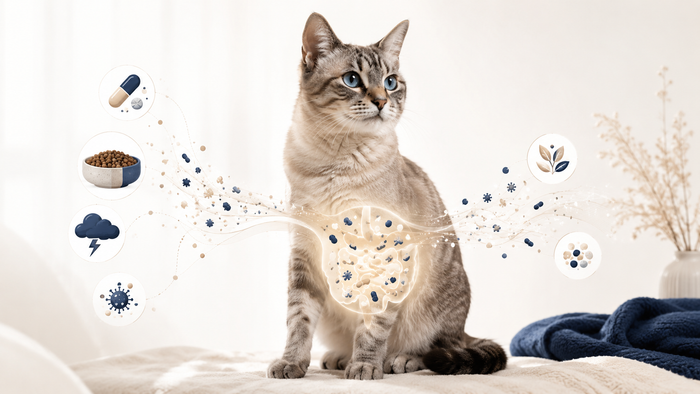
The Hidden Toll of Antibiotics: How to Protect Your Cat's Microbiome

by Stacey Rhee on Feb 03, 2026
The Hidden Toll of Antibiotics: How to Protect Your Cat's Microbiome While antibiotics are essential, life-saving medications for treating bacterial infections, they come with a significant hidden cost to your cat's health. These powerful drugs act as a "carpet bomb" within the feline gastrointestinal tract, wiping out populations of beneficial bacteria alongside the harmful pathogens they are meant to target. This massive disruption to the gut microbiome often leads to what we call "litter box nightmares"—acute diarrhea, digestive instability, and a compromised immune system. This widespread collateral damage is known as dysbiosis, an imbalance that can leave your cat vulnerable long after the infection is gone. You need a scientifically-backed plan to defend your cat's gut integrity and support its recovery. The Antibiotic Aftermath: Why Your Cat's Gut is at Risk When a veterinarian prescribes an antibiotic, it is to resolve a serious health threat. However, the drug cannot distinguish between the bad bacteria causing an infection and the good bacteria essential for digestion, nutrient absorption, and immune function. The result is a depleted and chaotic microbial environment. This sudden loss of beneficial microorganisms opens the door for opportunistic pathogens to multiply unchecked, often leading to severe antibiotic-associated diarrhea. Even more concerning, this gut disruption directly affects the 70% of your cat's immune system housed within the gut. When the intestinal barrier is weakened and the microbial community is thrown off balance, your cat's ability to defend against future health threats is compromised. To understand how supporting and rebuilding this gut-immune axis is essential for long-term resilience, read our guide, The 70% Factor: Why Feline Immunity Starts in the Gut. The gut barrier, which normally prevents toxins from entering the bloodstream, can become weakened and permeable. This disruption is not a minor inconvenience; it is a direct assault on the foundation of your cat's health. The ResiliBiome Firewall: A Defense That Antibiotics Can't Break This is where a specific, targeted intervention becomes critical. Many cat parents reach for a standard bacterial probiotic, not realizing that the antibiotics they are administering will likely destroy those beneficial bacteria as well. You need a defense that can withstand the antibiotic assault. We include Saccharomyces boulardii, a unique and powerful medicinal yeast, in our formula for this exact reason. At a precise dose of 480 Million CFU, S. boulardii provides a defensive "firewall" for the gut. Because it is a yeast, not a bacterium, it is naturally resistant to antibacterial medications. It can operate effectively in the gut even while antibiotics are active. While your cat is on medication, S. boulardii works to: Maintain gut barrier integrity, helping protect against "leaky gut." Secrete compounds that help neutralize bacterial toxins. Modulate the local immune response to help reduce inflammation. Occupy space and consume resources, helping prevent harmful bacteria from taking hold. It acts as a protective placeholder, holding the line until the antibiotic course is finished and the process of rebuilding the native microbiome can begin. The Transparency Check: Is Your Probiotic Hiding Its Formula? When your cat is recovering from antibiotic use, you cannot afford to guess. The efficacy of S. boulardii is dose-dependent, yet many brands hide their formulas behind "proprietary blends." A label might claim to include it, but you have no way of knowing if the dose is therapeutic or just a token amount for marketing purposes. Hidden "proprietary blends" are the single biggest obstacle to a successful recovery, making it impossible to verify dosing or strain identity—see our detailed analysis in "The Transparency Crisis: Why Your Cat's Probiotic is Hiding the Truth". This lack of transparency is a risk you should not have to take. We disclose every single ingredient and its exact dosage. Our formulation provides 480 Million CFU of S. boulardii per serving because the science indicates this is an effective amount to support gut health during antibiotic therapy. You have a right to see the data and verify that you are giving your cat a product built on clinical evidence, not marketing hype. The 7-Day Reset and the Full Recovery Timeline Rebuilding a complex ecosystem does not happen overnight. While S. boulardii provides immediate support, true microbiome recovery follows a predictable timeline. Understanding this process helps you set realistic expectations for your cat's healing journey. The 7-Day Reset: Acute Support (Weeks 1-2) For acute digestive upset caused by antibiotics, you can expect to see initial improvements within 3 to 7 days of starting ResiliBiome. During this phase, S. boulardii works to calm the gut, improve stool consistency, and reduce digestive discomfort. The other feline-origin probiotics in our formula begin the initial process of recolonization as the antibiotic pressure subsides. Weeks 4-8: Consistent Microbial Shifts This is the critical rebuilding phase. With daily supplementation, our feline-origin probiotic strains—Lactobacillus reuteri KU-LR01, Lacticaseibacillus paracasei KU-LP01, and Pediococcus acidilactici KU-PA01—begin to establish stable populations. Fed by our prebiotic blend, these beneficial bacteria multiply, restoring microbial diversity and strengthening the gut barrier. You will notice more consistent digestion and overall improvement in your cat's vitality. Weeks 8-12: Full Therapeutic Benefits By the end of this period, the full benefits of a restored microbiome become apparent. Your cat's digestive system is optimized, and its immune resilience is bolstered. The gut-brain axis is rebalanced, often leading to improved energy and appetite. This is the ultimate goal: not just to resolve diarrhea, but to rebuild a robust, resilient microbial ecosystem that supports long-term health. Consistency is key; daily administration is required to achieve these cumulative benefits. Your Call to Action: Defend Your Cat's Microbiome An antibiotic prescription should not mean sacrificing your cat's long-term digestive health. The damage caused by these necessary medications is significant, but it is not irreversible. By taking proactive steps, you can shield your cat from the worst of the fallout and accelerate its path back to wellness. Don't let antibiotics leave your cat's gut defenseless. Arm it with a transparent, scientifically formulated firewall designed to protect, defend, and rebuild. Start the journey to a balanced and resilient microbiome today. Your cat's future health depends on the choices you make now.
Cat eating from a bowl beside Kitty Up ResiliBiome probiotic box and sachets on a kitchen counter, with “70%” text overlay.

Cat Health and Nutrition Tips | Kitty Up Blog

The 70% Factor: Why Feline Immunity Starts in the Gut

by Luca Lois on Feb 02, 2026
Did you know 70% of your cat's immune system is in their gut? Learn how species-specific probiotics and beta-glucans "prime" their defenses for long-term health.
Tabby cat standing in a litter box with Kitty Up ResiliBiome probiotic box and sachet shown in the corner.

Cat Health and Nutrition Tips | Kitty Up Blog

Cat Probiotics: Strain IDs, CFU, and What Matters

by Luca Lois on Jan 17, 2026
Cat probiotics aren’t one size fits all. This guide explains what strain specific means, why strain IDs and research matter, how CFU can get diluted when too many strains are packed into one formula, and what to look for in a cat-first microbiome supplement like ResiliBiome.
Woman holding a cat at a table with a bag of Hinoki Cypress Cat Litter and a bowl of litter in a sunlit living room.

Cat Health and Nutrition Tips | Kitty Up Blog

Litter Box Odor: Why It Happens and How to Stop It

by Luca Lois on Jan 13, 2026
Litter box odor is usually caused by ammonia, moisture, bacteria, and residue buildup in the box. Learn why it happens, how to stop litter box odor with a simple cleaning routine, and how a hinoki litter booster can help keep litter fresher longer.
A person brushing a orange cat's head.

Cat Health and Nutrition Tips | Kitty Up Blog

Hairball Remedy for Cats: What You Should Know

by Kitty Up Krew on Mar 28, 2025
2
Grooming is more than just a habit—it is a fastidious feline ritual. However, because a cat’s barbed tongue is designed to catch loose fur, ingestion is inevitable. While most hair passes through the digestive tract unnoticed, some accumulates into dense, cylindrical masses known as trichobezoars, or hairballs. Many owners treat hairballs as a minor inconvenience, but chronic occurrences often signal a "perfect storm" of low fiber intake, inadequate hydration, and impaired gastrointestinal transit. New research highlights that while fiber acts as the "broom" to sweep the system, hydration is the essential lubricant that makes elimination possible. By moving toward a moisture-rich diet and integrating functional support like Kitty Up Purees and Resilibiome, you can transition from reactive cleaning to proactive care. Stop the cycle of retching and discomfort. Learn the science behind healthy gut motility and how to keep your cat—and your rugs—hairball-free.
Brown-and-white long-haired cat sitting indoors near a digital pet scale.

Cat Health and Nutrition Tips | Kitty Up Blog

The Hidden Crisis of Feline Obesity Uncovered

by Stacey Rhee on Mar 24, 2025
The Hidden Crisis of Feline Obesity Uncovered Understanding Feline Obesity: A Growing Epidemic Feline obesity is no longer a trivial concern or a comedic trope from social media. A cat health emergency exists—chronic, escalating, and vastly under-addressed. According to the Association for Pet Obesity Prevention, 60% of cats in the U.S. are overweight or obese. This isn’t just about a “chunky cat” looking cute—it’s about shorter lifespans, poor quality of life, and rising healthcare costs. Once, people dismissed those few “extra pounds” as harmless. But now, pet parents are waking up to the danger hidden behind phrases like “fat cat” or “super obese cat.” Feline obesity silently chips away at a cat’s vitality. What do we consider obese in cats? The Importance of Body Condition Over the Scale Veterinarians define obesity in cats as weighing 20% or more above their ideal body weight. However, the number on the scale doesn’t tell the whole story. Normal cat weight varies by breed. An 8-pound Siamese can be healthy. A domestic shorthair can weigh 10 pounds or more and still be healthy. Veterinarians use a Body Condition Score (BCS). This score is a visual and touch scale from 1 to 9. It helps them see how much body fat a cat has. 1-3 (Underweight): Ribs and spine visible; no fat cover 4-5 (Healthy weight for cats): Ribs are felt easily, visible waist from above 6-7 (Overweight): Ribs hard to feel; noticeable belly 8-9 (Obese): No waist; abdominal fat pad prominent Reference: WSAVA Global Nutrition Committee Use this cat obesity chart or a cat weight table to better understand where your cat falls. How Much Should My Cat Weigh? This is one of the most searched questions: “How much do cats weigh?” The answer depends on breed, gender, bone structure, and activity level. Here's a quick cat weight guide for common breeds: Breed Healthy Weight Range Domestic Shorthair 8–10 lbs. Siamese 5–10 lbs. Persian7–12 lbs. Maine Coon 10–25 lbs. The normal weight for a cat isn't one-size-fits-all. If you are asking, “Is my cat fat?” or “Is my cat overweight?”, your vet can help. They will check your cat's weight, muscle, and fat to find a healthy weight. The Impact: Do Fat Cats Die Younger? Yes—cat obesity significantly reduces lifespan. A normal-weight cat may live 15–20 years, while overweight cats often live only 10–15 years. Extra fat contributes to: Diabetes mellitus Hepatic lipidosis Arthritis and chronic joint pain Heart and liver disease FLUTD (Feline Lower Urinary Tract Disease) Anesthetic risk “Obesity is not a cosmetic issue—it’s a disease state that affects every organ system.” —Dr. Deborah Greco, DVM, Ph.D., DACVIM Why Are So Many Cats Overweight? Sedentary Lifestyles The shift from outdoor hunters to indoor couch potatoes means lower activity levels and weight gain. Cats need daily stimulation and interactive play to burn calories. Free Feeding & Carbs Free feeding high-carb dry food is a major contributor. Cats are obligate carnivores. They need animal protein to thrive, not corn or wheat. Overeating grain-based food leads to insulin spikes, fat storage, and eventually, cat obesity. Misleading Labels Terms like “complete and balanced” often mask formulas full of fillers. Look past the marketing and examine the actual ingredients. “Cats are desert carnivores. They were never built to eat corn or soy.” —Dr. Lisa Pierson, DVM Recognizing the Signs: Is Your Cat Overweight or Obese? If you’re unsure, use a cat weight chart or consult a vet. Common signs of feline obesity include: Sagging belly or abdominal fat pad No visible waist when viewed from above Ribs are hard to feel without pressing Difficulty grooming, reduced flexibility Lethargy or decreased interest in play Feline Obesity Recovery Plan Step 1: Vet Consultation Don’t try DIY weight loss. Rapid restriction can cause fatty liver syndrome. Step 2: Nutrition Shift Switch to high-protein, low-carb wet or raw food. Avoid kibble with corn, wheat, or soy. Step 3: Portion Control Feed your cat for their ideal weight, not current weight. A digital scale helps with accuracy. Step 4: Exercise Play is crucial. Use wand toys, treat puzzles, and encourage climbing for 15–20 minutes, twice daily. Step 5: Track Progress Use a cat weight loss tracker and check in with your vet. Weekly weigh-ins and photos help visualize success. To help your cat lose weight, focus on lasting changes and keep track of their progress. Final Thought: Feline Weight Loss is Lifesaving Feline weight loss isn’t about vanity—it’s about giving your cat the life they deserve. If you’re asking, “How to help cat lose weight?” start with awareness, commitment, and vet-led care. The aim isn't a thin cat. It's a lively, healthy, and content one. Every cat deserves not just to survive, but to thrive.
Close-up of a cat’s eyes with light reflecting in the pupils.

Cat Health and Nutrition Tips | Kitty Up Blog

Eye Care for Cats: A Complete Guide to Feline Eye Health

by Stacey Rhee on Mar 18, 2025
Eye Care for Cats: A Complete Guide to Feline Eye Health Introduction Your cat’s eyes are not just beautiful; they are essential for their survival, communication, and navigation. However, many cat owners overlook eye health, leading to preventable vision problems. In this guide, we’ll cover everything you need to know about keeping your feline’s eyes healthy, spotting common issues, and knowing when to seek veterinary care. 🔎 Understanding a Cat’s Eyes Unique Anatomical Features of Feline Eyes Cats have evolved to be exceptional night hunters, thanks to: ✔️ Large pupils that dilate for more light intake✔️ A tapetum lucidum, a reflective layer that enhances night vision✔️ Specialized retina cells that detect motion more efficiently than humans How a Cat’s Vision Differs from Humans 🐾 Cats see fewer colors than humans, primarily shades of blue and green.🐾 Their vision is sharper in dim light but lacks fine detail. Why Do Cat Eyes Glow in the Dark? The tapetum lucidum reflects light, creating that eerie glow in the dark. This adaptation helps them hunt in low-light environments. ✔️ Signs of Healthy Eyes in Cats A cat’s eyes should be: ✅ Bright and clear✅ Free from redness or swelling✅ Even pupil size and reaction to light✅ No excessive blinking or squinting ⚠️ Red flags include: excessive tearing, cloudiness, and sensitivity to light. 🚨 Common Eye Problems in Cats 1. Conjunctivitis ("Pink Eye") Symptoms: Redness, watery discharge, swollen eyelids Causes: Infections, allergens, or irritants Treatment: Prescription eye drops 2. Corneal Ulcers Symptoms: Cloudy eye, excessive blinking Causes: Scratches, dry eyes, infections Treatment: Antibiotics, sometimes surgery 3. Glaucoma Symptoms: Bulging eye, tearing, possible blindness Causes: Increased eye pressure Treatment: Medication, surgery 4. Cataracts Symptoms: Milky or cloudy lens Causes: Aging, diabetes Treatment: Surgery in severe cases 5. Uveitis Symptoms: Pain, red eye, sensitivity to light Causes: Infections, immune disorders Treatment: Anti-inflammatory drops ⚡ Causes of Eye Issues in Cats 🚫 Viral & Bacterial Infections (Herpesvirus, Chlamydia)🚫 Allergies & Environmental Irritants (Dust, smoke, pollen)🚫 Trauma & Scratches (Cat fights, rough play)🚫 Genetic Predisposition (Certain breeds are prone to eye issues) If your cat frequently rubs their eyes or squints, schedule a vet visit. 🧐 How to Examine Your Cat’s Eyes at Home ✔️ Look for redness & swelling✔️ Check for watery or pus-like discharge✔️ Observe for unequal pupil size If you see anything unusual, consult a veterinarian ASAP. 🛡️ Preventative Eye Care for Cats 1. Routine Cleaning Use a damp cotton pad and saline solution Gently wipe from the inner corner outward 2. Nutrition & Supplements Taurine: Essential for retinal health Vitamin A: Supports night vision Omega-3 fatty acids: Reduce inflammation 3. Vet Check-Ups Annual eye exams help catch issues early before they become severe. 📌 How to Clean Your Cat’s Eyes ✅ Do’s: ✔️ Use vet-approved saline solution✔️ Clean gently with soft pads ❌ Don’ts: ✖️ Never use human eye drops✖️ Avoid harsh chemicals like hydrogen peroxide ⏳ When to See a Veterinarian 🚨 Emergency Symptoms:⚠️ Sudden vision loss⚠️ Heavy green/yellow discharge⚠️ Excessive squinting or scratching at the eye If your cat displays these symptoms, seek urgent veterinary care. 🐱 Breeds Prone to Eye Problems Certain breeds have a higher risk of eye conditions: 🐾 Persians & Himalayans – Prone to tear staining & entropion🐾 Siamese & Burmese – Higher risk of glaucoma & cataracts🐾 Scottish Folds – Increased likelihood of eye infections If you own one of these breeds, routine eye care is even more crucial. 🚑 First Aid for Eye Injuries Minor Eye Injuries 🩹 Flush with sterile saline🩹 Keep your cat calm and prevent scratching Serious Eye Trauma 🚨 If you see blood, bulging, or pus, visit an emergency vet immediately. 👀 Behavioral Signs of Vision Problems 🐾 Clumsiness – Bumping into furniture🐾 Reluctance to Jump – Hesitant with heights🐾 Sudden Aggression – Easily startled These could indicate vision loss—get your cat checked ASAP. 🔬 The Future of Feline Eye Care Veterinary medicine is rapidly evolving, with new treatments including: 🌟 Gene Therapy & Stem Cell Treatments🌟 New Non-Surgical Treatments for Glaucoma🌟 Advanced Cataract Surgery Techniques 📢 Conclusion A proactive approach to eye care can prevent serious health issues and ensure your cat enjoys a lifetime of clear vision. 🛒 Shop our Lickable Puree Supplements for optimal vision support! 💬 Have a question? Drop a comment below!
A kitten with it's paw on a man's nose.

Cat Health and Nutrition Tips | Kitty Up Blog

Bringing Home a New Kitten: The Ultimate Preparation Guide

by Stacey Rhee on Jan 29, 2025
From the "Safe Zone" to the first vet visit, bringing home a kitten is a major transition. Draw on our years of foster and rescue experience to ensure your new friend starts off healthy, happy, and resilient from day one.
Close-up of a tabby cat with eyes closed while being petted on a bed.

Cat Health and Nutrition Tips | Kitty Up Blog

Understanding Feline Immunodeficiency Virus (FIV)

by Stacey Rhee on Jan 29, 2025
Feline Immunodeficiency Virus (FIV) is a lentivirus that compromises a cat's immune system, making them more susceptible to infections.