Cat Health and Nutrition Tips | Kitty Up Blog
Explore Feline Health, Wellness, Behavior, and Product Insights on the Kitty Up Blog
Cat Health and Nutrition Tips | Kitty Up Blog
Probiotics and Cat Urinary Wellness: What Parents Must Know
by Luca Lois
on Mar 13 2026
When your favorite feline starts acting strangely around the litter box, it is easy to panic. We know how scary, frustrating, and confusing it can be when your cat makes frequent trips to the box, strains, cries out, or has accidents on the rug. Many cat parents jump to the conclusion that their furry friend has a urinary tract infection (UTI).
But here is the truth: urinary symptoms do not always mean your cat has an infection. In fact, feline lower urinary tract signs stem from several different causes. One of the most common culprits is feline idiopathic cystitis, which is simply bladder inflammation without a clear underlying infection.
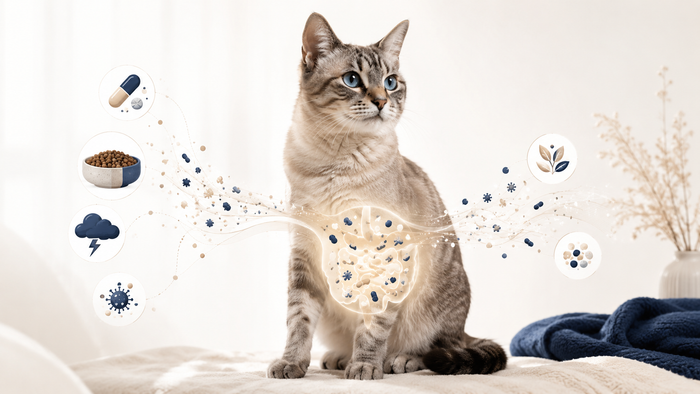
Because of this confusion, we need to look at probiotics and cat urinary wellness with a careful eye. While the science strongly supports probiotics for feline gut health and immune support, the idea that the microbiome influences urinary health is still being studied. Current evidence does not support the claim that probiotics prevent or treat UTIs in cats.
Let us break down what you actually need to know about your cat's urinary health, how the gut microbiome fits into the picture, and the best ways to keep your cat comfortable.
Why Cat Urinary Wellness is More Complicated Than You Think
When a cat shows signs of lower urinary tract distress, the root cause could be bladder inflammation, crystals, stones, urethral plugs, an infection, or another condition altogether. The tricky part is that these conditions look practically identical from the outside.
Veterinary consensus emphasizes that lower urinary tract signs in cats are often indistinguishable between different underlying diseases. This is why getting a proper diagnosis from your vet matters so much. You cannot simply guess what is wrong based on behavior alone.
Common signs of urinary problems in cats
Keep a close eye out for these common red flags:
Frequent trips to the litter box
Straining to urinate with little success
Blood visible in the urine
Urinating outside the litter box
Crying or vocalizing while trying to pee
Passing only tiny drops of urine at a time
You should never ignore these signs. Cats with a urethral obstruction may show these exact same symptoms but pass little to no urine. This is an absolute emergency that requires immediate veterinary care.
Do Probiotics Help Support Cat Urinary Wellness?
Let us get straight to the facts. Probiotics may support cat urinary wellness indirectly. They do this by helping maintain gut health, supporting immune function, and promoting whole-body balance. However, they are not proven treatments for feline UTIs.
That distinction is incredibly important.
Researchers are highly interested in the relationship between the gut microbiome and the urinary tract. Science has identified a urinary microbiome in cats, often called the urobiome. Newer studies suggest that cats dealing with urinary conditions—like feline idiopathic cystitis or kidney stones—might show different urinary microbial patterns than healthy cats.
These findings are exciting, but they do not justify marketing claims that "probiotics prevent UTIs in cats." A much safer takeaway is that the feline microbiome likely plays a role in broader health. Scientists are still working hard to understand exactly how gut and urinary microbial ecosystems interact in our feline friends.
What Probiotics Are Actually Supported For in Cats
Today, the strongest evidence for probiotic use in cats revolves around gut health.
Recent studies show that specific multistrain probiotics help healthy cats by modulating gut microbes. They increase beneficial short-chain fatty acids, reduce inflammation, and improve antioxidant status. Other studies point to improved gut barrier markers and a boost in beneficial bacteria.
However, not every probiotic does the same thing. Probiotic effects in cats depend entirely on the specific strain, the formula, the dose, and the viability of the bacteria. When you shop for cat probiotics, look for targeted gut and immune support rather than a magical cure-all for urinary issues.
The Gut and Urinary Connection in Cats
More and more cat parents are searching for answers about the gut-urinary connection. You have probably noticed that wellness is connected; a healthy gut affects the whole body.
A thriving gut microbiome supports smooth digestion, a strong intestinal barrier, and balanced inflammatory responses. Because the immune system impacts the entire body, researchers want to know if microbiome support could become a core part of urinary health strategies. We are just in the early stages of that science.
The right message is not that probiotics cure urinary issues. Instead, understand that probiotics support feline gut and immune health. A healthy microbiome is just one puzzle piece of a broader wellness routine.
Hydration is Still Crucial for Cat Urinary Wellness
If you want to support your cat right now, hydration remains your biggest and most effective tool.
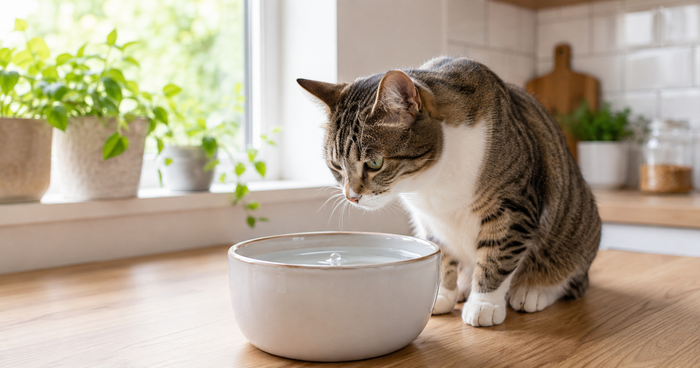
Cats need about four ounces of water per five pounds of lean body weight every single day. That means an average ten-pound cat needs roughly one cup of water daily. Wet food is a fantastic tool here, as it can contain up to 80% water.
More water intake helps create more dilute urine. Dilute urine is a cornerstone of urinary management strategies, especially for conditions like feline idiopathic cystitis. Increasing moisture intake and feeding canned food are practical, highly effective habits. Always provide access to fresh water, encourage wet food, and keep the litter box pristine to encourage frequent use.
Stress and Environment Matter More Than You Realize
Stress plays a massive role in the physical health of many cats. Feline idiopathic cystitis is heavily linked to stress and environmental factors.
Your cat's urinary health often relies on how safe and relaxed they feel in their home. Managing stress involves a few key environmental changes.
To support a stress-free environment, try offering:
A consistent daily routine
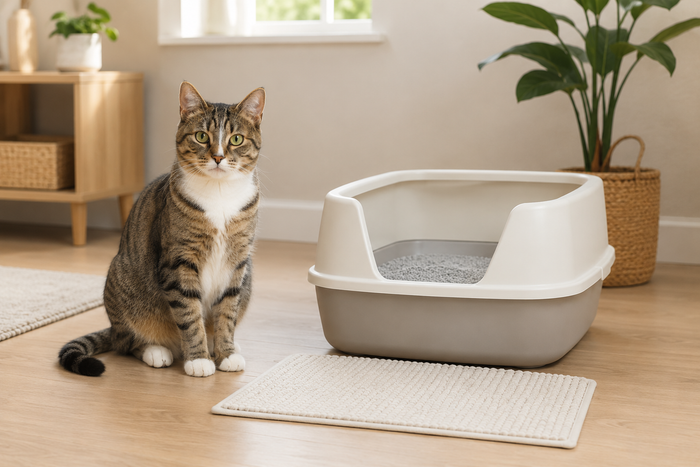
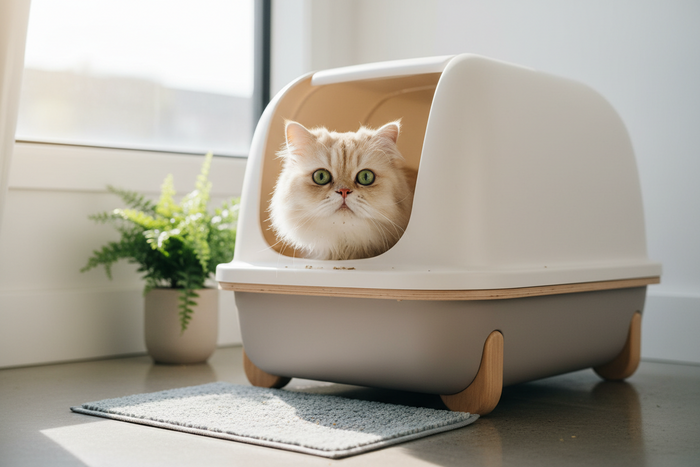
Extremely clean litter boxes
Enough litter boxes (one per cat, plus one extra)
Reduced social tension between household pets
Plenty of hiding spots and vertical spaces to climb
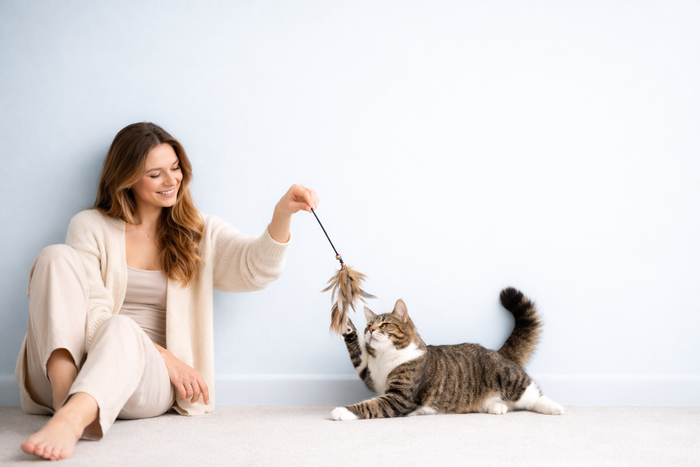
Daily play and mental enrichment
A daily probiotic fits nicely into this holistic wellness picture, but it is not a standalone fix.
UTIs vs. General Urinary Symptoms: What Cat Parents Should Know
A lot of online content uses the term "UTI" as a blanket statement for every urinary issue. This is simply not accurate. While some cats do get true bacterial urinary tract infections, the vast majority do not.
This is exactly why a veterinary exam and proper diagnostics matter. You cannot assume the cause. Male cats, in particular, are prone to becoming blocked. A urinary obstruction is a life-threatening crisis. If your male cat is straining and nothing is coming out, grab your carrier and head to the emergency vet.
A Safer Way to Talk About Probiotics and Urinary Health
For anyone looking to understand this topic, here is the smartest framework:
Probiotics help support gut and immune health as part of a daily routine. Because the microbiome plays a broad role in whole-body balance, veterinarians are paying closer attention to how gut health connects to the urinary tract. However, probiotics are never a substitute for veterinary care. They should not be used or viewed as a treatment for UTIs.
When to Call Your Veterinarian
Contact your vet promptly if your cat experiences:
Blood in the urine
Constant trips to the litter box
Straining to go
Crying or yowling in the litter box
Peeing on clothes, rugs, or outside the box
Noticeably reduced urine output
Seek emergency care immediately if your cat is trying to urinate and little or no urine comes out. Do not wait to see if it improves.
Final Thoughts on Probiotics for Feline Health
The science surrounding probiotics and feline health is fascinating and constantly evolving. We know that probiotics support gut health, and gut health is vital for immunity. What we do not have yet is concrete proof that probiotics treat urinary infections.
For now, the best strategy is a broad, supportive one. Keep your cat hydrated, feed moisture-rich foods, minimize household stress, and scoop those litter boxes daily. Use probiotics as one helpful part of a bigger wellness plan, not a shortcut. And most importantly, always work alongside your veterinarian when symptoms appear.
FAQ: Probiotics and Cat Urinary Wellness
Can probiotics help prevent UTIs in cats?Current research does not support the claim that probiotics prevent UTIs in cats. Probiotics are strongly supported for gut health and immune support, but the direct urinary connection is still under investigation.
Are urinary symptoms in cats always caused by a UTI?No. Many urinary symptoms stem from feline idiopathic cystitis, stones, crystals, or urethral plugs. A bacterial infection is only one of many possible causes.
What is the connection between gut health and urinary wellness in cats?Researchers are currently exploring how the feline microbiome influences the whole body. While studies show differences in the urinary microbes of cats with certain conditions, the science remains in the early stages.
What is the best way to support cat urinary health at home?Focus on hydration, wet food, stress reduction, and impeccably clean litter boxes. Always seek prompt veterinary attention if you notice any symptoms.
When is a urinary problem in cats an emergency?If your cat is straining in the litter box and little to no urine is coming out, seek emergency veterinary care immediately. This is especially critical for male cats.
Written by Kitty UpKitty Up is a feline-focused wellness brand dedicated to science-backed nutrition and educational content for cat parents.
Medical Sourcing NoteThis article was developed using veterinary and scientific sources, including the Cornell Feline Health Center, the Merck Veterinary Manual, VCA Animal Hospitals, and peer-reviewed feline research. It is for educational purposes only and is not a substitute for veterinary diagnosis or treatment.
DisclaimerThis content is for educational purposes only. If your cat has urinary symptoms, please contact your veterinarian promptly.
Helpful Internal Links to Explore:
Gut health for cats
Why cats need moisture-rich nutrition
Signs your cat may be stressed
Building a daily wellness routine for cats
How to support litter box wellness
External Authority Resources:
Cornell Feline Health Center
Merck Veterinary Manual
VCA Animal Hospitals
Cat Health and Nutrition Tips | Kitty Up Blog
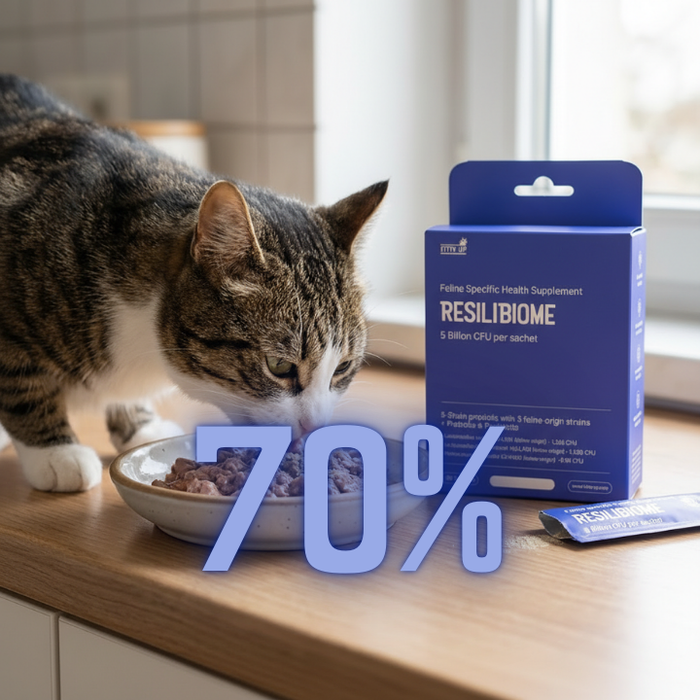
The 70% Factor: Why Feline Immunity Starts in the Gut
by Luca Lois
on Feb 02 2026
Did you know 70% of your cat's immune system is in their gut? Learn how species-specific probiotics and beta-glucans "prime" their defenses for long-term health.
Cat Health and Nutrition Tips | Kitty Up Blog
The Hidden Crisis of Feline Obesity Uncovered
by Stacey Rhee
on Mar 24 2025
The Hidden Crisis of Feline Obesity Uncovered
Understanding Feline Obesity: A Growing Epidemic
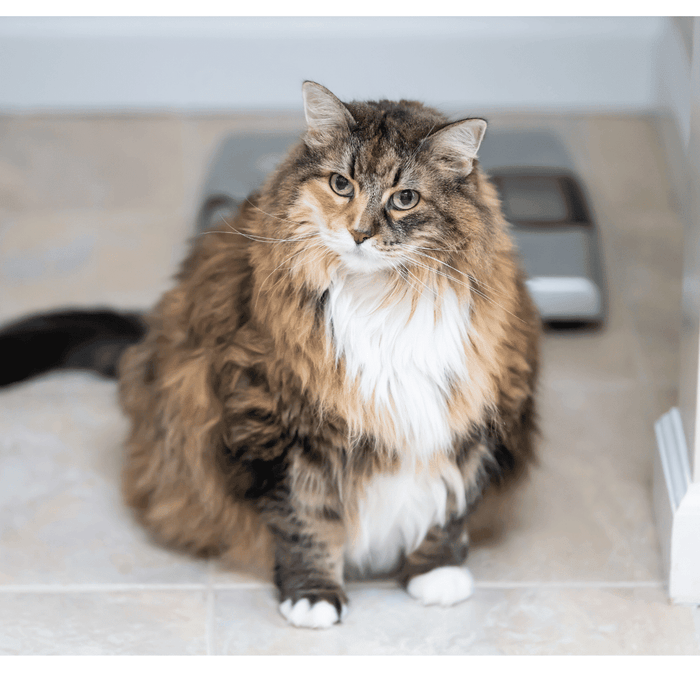
Feline obesity is no longer a trivial concern or a comedic trope from social media. A cat health emergency exists—chronic, escalating, and vastly under-addressed. According to the Association for Pet Obesity Prevention, 60% of cats in the U.S. are overweight or obese. This isn’t just about a “chunky cat” looking cute—it’s about shorter lifespans, poor quality of life, and rising healthcare costs.
Once, people dismissed those few “extra pounds” as harmless. But now, pet parents are waking up to the danger hidden behind phrases like “fat cat” or “super obese cat.” Feline obesity silently chips away at a cat’s vitality.
What do we consider obese in cats?
The Importance of Body Condition Over the Scale
Veterinarians define obesity in cats as weighing 20% or more above their ideal body weight. However, the number on the scale doesn’t tell the whole story.
Normal cat weight varies by breed. An 8-pound Siamese can be healthy. A domestic shorthair can weigh 10 pounds or more and still be healthy.
Veterinarians use a Body Condition Score (BCS). This score is a visual and touch scale from 1 to 9. It helps them see how much body fat a cat has.
1-3 (Underweight): Ribs and spine visible; no fat cover
4-5 (Healthy weight for cats): Ribs are felt easily, visible waist from above
6-7 (Overweight): Ribs hard to feel; noticeable belly
8-9 (Obese): No waist; abdominal fat pad prominent
Reference: WSAVA Global Nutrition Committee
Use this cat obesity chart or a cat weight table to better understand where your cat falls.
How Much Should My Cat Weigh?
This is one of the most searched questions: “How much do cats weigh?” The answer depends on breed, gender, bone structure, and activity level. Here's a quick cat weight guide for common breeds:
Breed Healthy Weight Range Domestic Shorthair 8–10 lbs. Siamese 5–10 lbs. Persian7–12 lbs. Maine Coon 10–25 lbs.
The normal weight for a cat isn't one-size-fits-all. If you are asking, “Is my cat fat?” or “Is my cat overweight?”, your vet can help. They will check your cat's weight, muscle, and fat to find a healthy weight.
The Impact: Do Fat Cats Die Younger?
Yes—cat obesity significantly reduces lifespan. A normal-weight cat may live 15–20 years, while overweight cats often live only 10–15 years. Extra fat contributes to:
Diabetes mellitus
Hepatic lipidosis
Arthritis and chronic joint pain
Heart and liver disease
FLUTD (Feline Lower Urinary Tract Disease)
Anesthetic risk
“Obesity is not a cosmetic issue—it’s a disease state that affects every organ system.”
—Dr. Deborah Greco, DVM, Ph.D., DACVIM
Why Are So Many Cats Overweight?
Sedentary Lifestyles
The shift from outdoor hunters to indoor couch potatoes means lower activity levels and weight gain. Cats need daily stimulation and interactive play to burn calories.
Free Feeding & Carbs
Free feeding high-carb dry food is a major contributor. Cats are obligate carnivores. They need animal protein to thrive, not corn or wheat. Overeating grain-based food leads to insulin spikes, fat storage, and eventually, cat obesity.
Misleading Labels
Terms like “complete and balanced” often mask formulas full of fillers. Look past the marketing and examine the actual ingredients.
“Cats are desert carnivores. They were never built to eat corn or soy.”
—Dr. Lisa Pierson, DVM
Recognizing the Signs: Is Your Cat Overweight or Obese?
If you’re unsure, use a cat weight chart or consult a vet. Common signs of feline obesity include:
Sagging belly or abdominal fat pad
No visible waist when viewed from above
Ribs are hard to feel without pressing
Difficulty grooming, reduced flexibility
Lethargy or decreased interest in play
Feline Obesity Recovery Plan
Step 1: Vet Consultation
Don’t try DIY weight loss. Rapid restriction can cause fatty liver syndrome.
Step 2: Nutrition Shift
Switch to high-protein, low-carb wet or raw food. Avoid kibble with corn, wheat, or soy.
Step 3: Portion Control
Feed your cat for their ideal weight, not current weight. A digital scale helps with accuracy.
Step 4: Exercise
Play is crucial. Use wand toys, treat puzzles, and encourage climbing for 15–20 minutes, twice daily.
Step 5: Track Progress
Use a cat weight loss tracker and check in with your vet. Weekly weigh-ins and photos help visualize success.
To help your cat lose weight, focus on lasting changes and keep track of their progress.
Final Thought: Feline Weight Loss is Lifesaving
Feline weight loss isn’t about vanity—it’s about giving your cat the life they deserve. If you’re asking, “How to help cat lose weight?” start with awareness, commitment, and vet-led care.
The aim isn't a thin cat. It's a lively, healthy, and content one. Every cat deserves not just to survive, but to thrive.